Disraeli by David Cesarani
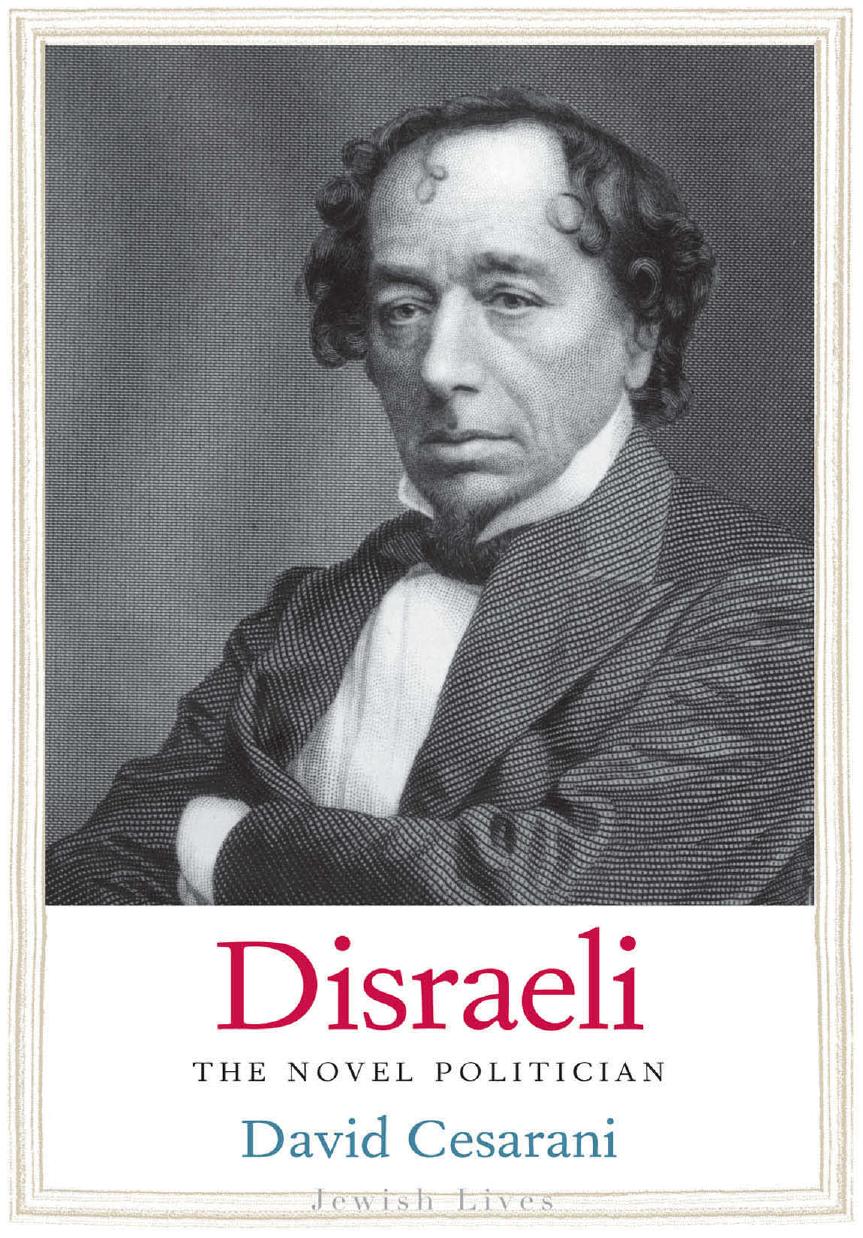
Author:David Cesarani
Language: eng
Format: epub, pdf
Publisher: Yale University Press
Published: 2016-06-14T16:00:00+00:00
VII
The years of opposition between 1852 and 1858 had been long and grueling. Disraeli worked ceaselessly to persuade his party to drop protection and to persuade the electorate that the Tories had changed. He also had to nurture his relationship with Lord Derby, whose notion of leadership sometimes reduced him in despair. At times it seemed as if all the magnates did was hunt, shoot, and race horses.149
At the end of January 1855 the government of Lord Aberdeen was defeated on a key vote, and once more Disraeli’s anticipation quickened. But, once more, Lord Derby failed to knit together an administration that could command the confidence of the Commons. Disraeli had now been thwarted twice at the very cusp of power. In the winter of 1856–57, while he was vacationing in Paris with Mary Anne, there was more grumbling about his leadership. It was spiced with prejudice. Alexander Beresford Hope, one of his most persistent antagonists, always referred to him as “the Jew.”150
In March 1857 Palmerston won an increased majority in the general election. His dominance appeared absolute, and Disraeli seemed condemned to spend his life in fruitless opposition. To compound his misery, Lord Litchfield decided to call in the loan he and his brother had extended for the purchase of Hughendon. His debts now amounted to a near-astronomical £25,750, and his income could not cover the cost of both running the estate and servicing the interest—let alone repaying such a huge capital sum.151
Partial salvation came in the form of another government crisis. On 19 February 1858 Palmerston’s government unexpectedly lost a vote in the Commons. Queen Victoria called on Lord Derby to form an administration and, rather to everyone’s surprise, he did. Paradoxically, his task was simplified because renewed attempts to persuade Lord Grey and Gladstone to join him were rejected. Once again Disraeli’s presence repelled them. Lord Edward Stanley, by now a rising talent on the liberal wing of the Conservative Party, also declined to take office, partly because he foresaw that it would be a weak, doomed administration but also because “the character of Disraeli, who must lead the Commons, does not command general confidence, either in parliament or among the public.” The government would never attract men of stature from the Peelites because of the “connection with Disraeli. Able as he is, this man will never command public confidence.”152
Nevertheless, a week later Disraeli was back in the chancellor’s official residence, 11 Downing Street, in an office that carried a handsome annuity and a pension. Notwithstanding this good fortune he faced a myriad of problems both at the Treasury and as leader of the House. The first hurdle was the budget, which the new chancellor managed with aplomb. Efforts to strengthen the minority government by inducing Gladstone to join foundered on his now implacable antipathy to Disraeli. The government struggled on into the summer, when, amidst the welter of routine business, the Jewish question blew up again.153
Russell’s Oaths Bill had passed through the Commons without a division,
Download
This site does not store any files on its server. We only index and link to content provided by other sites. Please contact the content providers to delete copyright contents if any and email us, we'll remove relevant links or contents immediately.
| U.K. Prime Ministers | U.S. Presidents |
Waking Up in Heaven: A True Story of Brokenness, Heaven, and Life Again by McVea Crystal & Tresniowski Alex(37752)
Empire of the Sikhs by Patwant Singh(23047)
We're Going to Need More Wine by Gabrielle Union(19010)
Hans Sturm: A Soldier's Odyssey on the Eastern Front by Gordon Williamson(18547)
Leonardo da Vinci by Walter Isaacson(13262)
The Radium Girls by Kate Moore(11990)
Tools of Titans by Timothy Ferriss(8331)
Educated by Tara Westover(8021)
How to Be a Bawse: A Guide to Conquering Life by Lilly Singh(7447)
Permanent Record by Edward Snowden(5804)
The Last Black Unicorn by Tiffany Haddish(5611)
The Rise and Fall of Senator Joe McCarthy by James Cross Giblin(5256)
Promise Me, Dad by Joe Biden(5122)
The Wind in My Hair by Masih Alinejad(5063)
A Higher Loyalty: Truth, Lies, and Leadership by James Comey(4927)
The Crown by Robert Lacey(4777)
The Iron Duke by The Iron Duke(4331)
Joan of Arc by Mary Gordon(4069)
Stalin by Stephen Kotkin(3928)
